
Trump Demands Attorney General Pam Bondi Prosecute His Political Foes
Washington D.C., September 20-21, 2025 — President Donald Trump on Saturday intensified his pressure on Attorney General Pam Bondi to initiate criminal prosecutions against a number of his political adversaries, claiming delays by prosecutors are hurting both his administration's reputation and the credibility of the Justice Department.
What Trump Is Demanding
In public posts on Truth Social, Trump singled out Senator Adam Schiff, former FBI Director James Comey, and New York Attorney General Letitia James, accusing them of wrongdoing and urging that they be charged.
He criticized the former U.S. Attorney for the Eastern District of Virginia, Erik Siebert, alleging Siebert had refused to bring charges against Letitia James because he believed the evidence was insufficient. Trump insists “there is a GREAT CASE.”
Trump has nominated Lindsey Halligan, a former personal attorney, to replace Siebert. Critics raise concerns because Halligan does not have prosecutorial experience.
Reactions & Concerns
Legal experts and civil liberties organizations are sounding alarms that such demands represent a serious threat to Justice Department independence and could be a form of political retribution.
Letitia James and her legal team have rejected the allegations, describing them as politically motivated.
Others note that previous investigations into some of the claims (e.g. mortgage fraud allegations against James) reportedly found insufficient evidence to support criminal charges.
This episode is part of a broader pattern in which Trump has sought to use the tools of the executive branch to pressure the Department of Justice into acting against his political opponents.
Critics argue that such actions risk undermining norms meant to keep law enforcement independent from political intervention. Supporters of Trump counter that if wrongdoing is real, the DOJ has an obligation to investigate, regardless of politics. The tension raises constitutional questions about separation of powers and the role of prosecutorial discretion.
source articles:
https://www.washingtonpost.com/national-security/2025/09/20/replacement-named-va-prosecutor-ousted-over-probes-trump-foes/
https://www.politico.com/news/2025/09/20/trump-bondi-truth-social-00574380
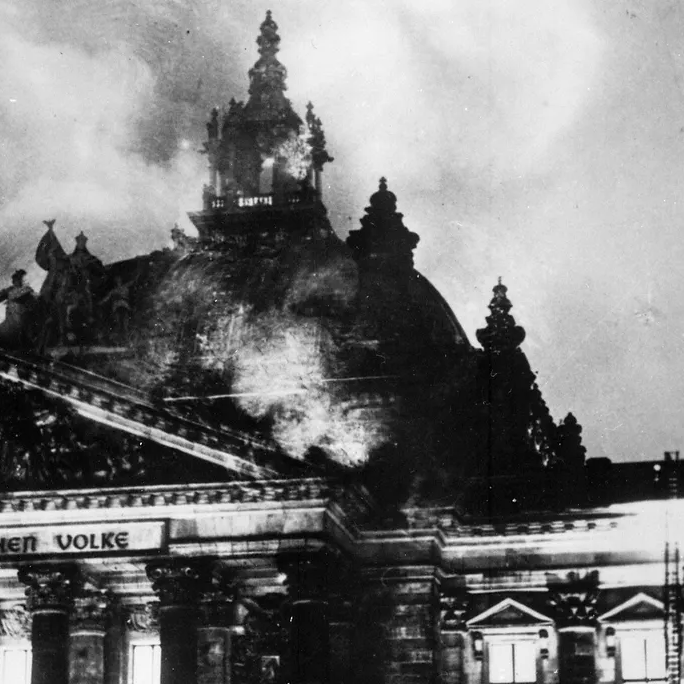
How Nazi Germany Turned Justice Into a Political Weapon
Berlin, 1933–1945 — In Adolf Hitler’s Germany, the legal system was systematically transformed into a tool for eliminating political opposition. From the Reichstag Fire in 1933 to the show trials of the People’s Court during World War II, prosecutors and judges were directed not to uphold the law, but to enforce Nazi political priorities.
Emergency Powers After the Reichstag Fire
On February 27, 1933, a fire gutted the Reichstag, Germany’s parliament building. The next day, President Paul von Hindenburg, under pressure from Hitler, signed the Reichstag Fire Decree. It suspended civil liberties and authorized police and prosecutors to arrest and detain without charge. Thousands of Communists, Social Democrats, and trade unionists were immediately rounded up.
Special Courts Target Dissent
That same year, the regime established Sondergerichte (special courts) to handle cases of political dissent. These courts had no juries and minimal legal safeguards, ensuring convictions for alleged opponents of the state. Defendants often faced long prison terms or execution after rapid trials.
The People’s Court Becomes a Political Weapon
In 1934, Hitler created the Volksgerichtshof (People’s Court) to prosecute treason and crimes against the state. The court was infamous under Judge Roland Freisler, who berated defendants in public show trials. After the failed assassination attempt against Hitler on July 20, 1944, more than 7,000 people were arrested; many were tried before the People’s Court and executed.
The Night of the Long Knives and Retroactive Law
In June 1934, Hitler ordered the purge of SA leaders and other rivals in what became known as the Night of the Long Knives. To shield himself and his inner circle from accountability, the Nazi-controlled Reichstag passed a law retroactively legalizing the killings. This marked a turning point where the justice system no longer restrained political violence but instead legitimized it.
A Legal System Subordinated to Power
By the outbreak of World War II, Germany’s legal system had been fully subordinated to Nazi control. Independent judicial review disappeared, prosecutors acted as political enforcers, and courts became instruments of repression. Legal historian Ingo Müller later described Nazi law as “nothing more than the will of the Führer given form.”
Historical Implications
The Nazi use of legal institutions as political weapons demonstrates how the rule of law can collapse under authoritarian control. Prosecutors and judges, once intended as neutral arbiters, were turned into instruments of intimidation — punishing not crimes, but opposition to the regime.
sources articles:
https://encyclopedia.ushmm.org/content/en/article/the-reichstag-fire-decree
https://www.yadvashem.org/odot_pdf/Microsoft%20Word%20-%205972.pdf
https://encyclopedia.ushmm.org/content/en/article/the-peoples-court
https://www.britannica.com/event/Night-of-the-Long-Knives