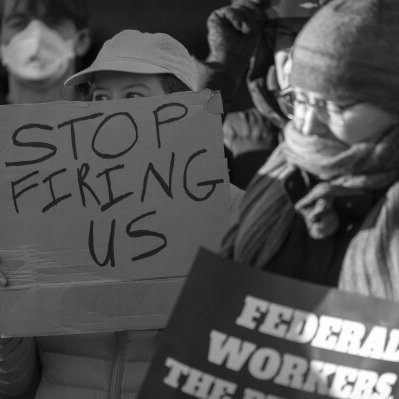
Trump Faces Accusations of Purging “Liberal” Judges in Judicial Shakeup
Washington, D.C. September 23, 2025 — President Donald J. Trump is drawing sharp criticism from legal scholars, civil rights groups and some members of Congress amid what critics describe as a concerted effort to remove federal judges, immigration judges, and independent‐agency officials perceived as ideologically hostile to his agenda.
Scale and Scope of the Firings
In September 2025, nearly 20 immigration judges received emails notifying them of termination, adding to over 80 dismissals already carried out this year, according to union sources.
Earlier, in July, the International Federation of Professional and Technical Engineers (IFPTE), which represents immigration judges, reported that 17 judges were terminated across 10 states “without cause.”
In California, two judges in Concord—Florence Chamberlain and Roberta Wilson—were among those dismissed.
Independent Agencies Also Affected
Trump’s efforts extend beyond immigration courts. He has moved to oust leaders of agencies historically insulated from purely political control.
For instance, the Supreme Court recently allowed his administration to remove Rebecca Slaughter, a Democratic member of the Federal Trade Commission (FTC), pending full review of the matter.
Trump has also sought to dismiss Federal Reserve Governor Lisa Cook—a move that is currently under legal challenge as potentially violating statutory protections.
Hampton Dellinger, head of the Office of Special Counsel, was fired by Trump without an explicit cause cited. Dellinger contended the removal ignored the law’s requirement that such an official may only be terminated for “inefficiency, neglect of duty, or malfeasance.”
A federal judge initially blocked the removal, but an appeals court later allowed it, and Dellinger dropped his suit.
Supporters of the administration argue that many of the replaced judges were underperforming or failing to manage heavy caseloads, particularly in immigration courts. The DOJ has cited efforts to streamline adjudication and decry inefficiencies.
Yet critics see a clear pattern: judges with backgrounds representing immigrants, civil liberties, or appointed during Democratic administrations appear disproportionately affected.
In Massachusetts, for instance, senators Ed Markey and Elizabeth Warren accused the administration of “weeding out qualified judges appointed under President Biden,” arguing that the dismissals were “unprecedented.”
Trump himself has publicly criticized judges he views as hostile. He has repeatedly attacked “Obama judges” on Truth Social and urged the impeachment of judges who ruled against his policies. Legal commentators say such rhetoric heightens tensions around judicial independence.
In court, the administration has advanced a more expansive view of executive removal power, contending that modern regulatory authority justifies relaxing removal protections. This argument is a central question in pending Supreme Court cases that could reshape the balance of power between the executive and independent institutions.
Several court decisions have resisted the administration’s efforts. A judge in Washington, D.C., ordered that Gwynee Wilcox, dismissed from the National Labor Relations Board (NLRB), be reinstated, ruling her removal violated statutory “for cause” protections.
Legal scholars warn such a purge could weaken judicial independence and tilt the balance of power dangerously toward the executive. The judiciary has traditionally functioned as a check on presidential action, especially when policies face constitutional questions.
Some experts note a possible chilling effect: judges, fearing reelection or removal, might shy away from rulings that displease the president.
The coming months will be pivotal. The Supreme Court will hear arguments in December on whether the 1935 precedent Humphrey’s Executor, which limits removal of independent agency officials, should be overturned.
Meanwhile, the battle over Lisa Cook’s dismissal continues, and additional litigation is likely in lower courts as more judges are targeted.
If the administration prevails legally, it could set a powerful precedent: presidents might be able to dismiss judges and regulatory officials more freely, including those whose rulings are unfavorable to the administration’s agenda. If courts push back, the judiciary may reassert itself as a bulwark against executive overreach.
sources articles:
https://apnews.com/article/229830c0779857164a832793c2a8f3e4
https://laist.com/brief/news/politics/trump-administration-fires-more-immigration-judges-including-in-california
https://www.fedagent.com/news/trump-administration-fires-more-immigration-court-judges-union
https://www.nbcbayarea.com/news/local/concord-immigration-judges-fired-trump/3951432/
https://www.reuters.com/world/us-supreme-court-lets-trump-remove-ftc-member-now-2025-09-22
https://theweek.com/politics/trump-supreme-court-federal-reserve-lisa-cook
https://en.wikipedia.org/wiki/Hampton_Dellinger
https://www.wbur.org/news/2025/07/03/trump-fired-immigration-judges
https://www.acslaw.org/expertforum/the-legal-battle-over-liberal-democracy
https://www.reuters.com/legal/us-judge-reinstates-democratic-labor-board-member-fired-by-trump-2025-03-
https://www.ibanet.org/Trump-versus-the-judiciary
https://apnews.com/article/2149d7c3802b3ddea6e157d3a0afd292
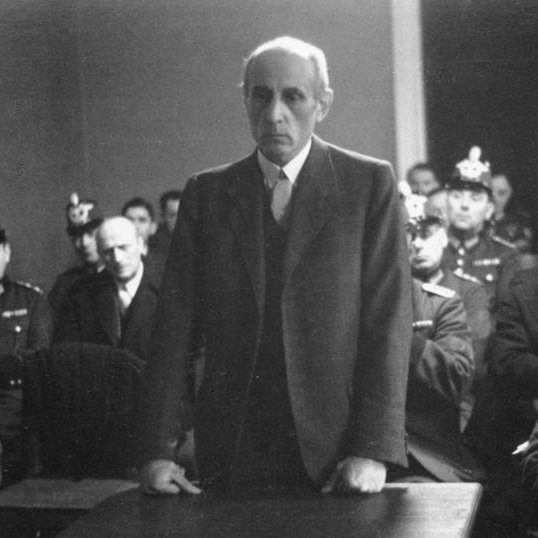
Hitler’s Purges of Civil Service and Judiciary Cement Dictatorial Control
Berlin, 1933–1934 — In the first two years of Adolf Hitler’s rule, the Nazi regime moved rapidly to consolidate power by eliminating independent voices in Germany’s civil service, judiciary, and legal professions. Historians say these purges were a critical step in dismantling the Weimar Republic’s democratic institutions and replacing them with a totalitarian state.
On April 7, 1933, the Nazi-dominated Reichstag passed the Law for the Restoration of the Professional Civil Service. This law provided the legal framework to dismiss civil servants and judges deemed “politically unreliable” or of “non-Aryan descent.” Jewish officials and those linked to left-wing or liberal parties were especially targeted.
By the end of 1933, thousands of judges, lawyers, and clerks had been removed. Most positions were quickly filled by Nazi Party members or sympathizers, ensuring that the legal system would align with the regime’s policies.
With independent judges removed, Nazi ideology was injected into the legal system. The German Judges’ Association was merged into the Nazi-controlled National Socialist League of German Jurists. Judges were required to swear loyalty to Hitler and interpret laws according to “the healthy sentiment of the people,” a vague standard that aligned with party directives rather than established law.
The purges were not limited to political opponents. Jewish judges and lawyers were systematically removed from their professions, part of a broader strategy of excluding Jews from public life.
This racialized purge foreshadowed the later Nuremberg Laws (1935), which codified racial discrimination across German society.
Elimination of Opposition
The removal of independent officials coincided with other steps to eliminate dissent. The Enabling Act of March 1933 gave Hitler’s cabinet the power to enact laws without parliamentary approval, making it easier to pass decrees that consolidated power. Combined with the civil service law, these measures destroyed institutional checks.
By 1934, the German judiciary had been effectively subordinated to Nazi ideology. Courts upheld discriminatory laws, punished regime critics, and sanctioned the regime’s political violence. Without independent judges or civil servants, there were few internal barriers to the Nazi state’s escalating policies of repression and persecution.
Legal scholars view this early purge of officials as a decisive moment in Hitler’s rise: it turned institutions meant to safeguard democracy into tools of dictatorship.
sources articles:
https://encyclopedia.ushmm.org/content/en/article/law-for-the-restoration-of-the-professional-civil-service
https://www.jewishvirtuallibrary.org/law-for-the-restoration-of-the-professional-civil-service-april-7-1933
https://avalon.law.yale.edu/subject_menus/nazireg.asp
https://www.penguinrandomhouse.com/books/94082/hitler-by-ian-kershaw/