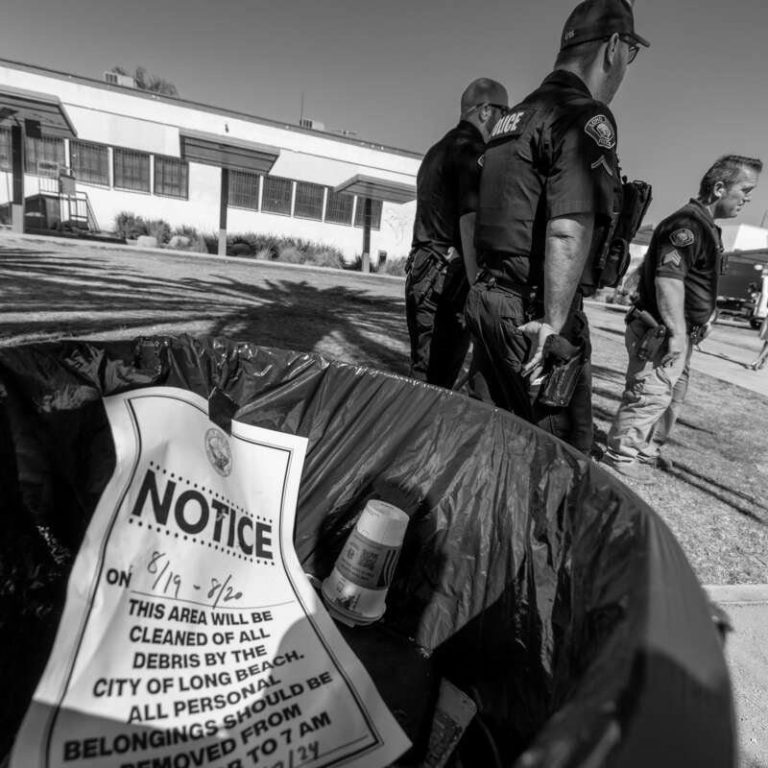
Trump’s New Crackdown on the Homeless Draws Sharp Criticism Over Civil Liberties, Effectiveness
Washington, D.C. —July 25, 2025 -- President Donald Trump signed Executive Order 14321, titled “Ending Crime and Disorder on America’s Streets,” which sets a confrontational federal policy toward homelessness and mental health treatment. The move marks a shift away from long-standing federal approaches toward more coercive, enforcement–oriented methods, raising alarm among civil rights groups, public health advocates, and local service providers.
The order directs the Attorney General, in consultation with HHS, to challenge judicial precedents and consent decrees that limit involuntary commitment of people with serious mental illness or substance use disorders.
The order instructs HUD and HHS to withdraw support from “Housing First” models (which place individuals into housing without preconditions) and to require stricter accountability, including mandating treatment services for program participants.
The executive order encourages state and local governments to enforce bans on camping, loitering, and public drug use, and signals that federal grant priorities may favor jurisdictions that adopt more aggressive enforcement.
Agencies are to coordinate data across homelessness programs and may condition discretionary grants on compliance with the new priorities.
HUD Secretary Scott Turner praised the order, saying it “restores accountability to homelessness programs by ensuring Americans suffering from severe mental illness or addiction get treatment. The administration frames the approach as necessary to protect public safety and reduce disorder in urban areas.
The ACLU condemned the order as weaponizing federal funding to push punitive solutions, warning that forced institutionalization “doesn’t work” and poses dangers to people with disabilities.
Harvard public health analysts note that the order encourages broad use of involuntary commitment without strengthening the community-based resources needed to support recovery and reintegration.
The executive order would push DOJ to overturn key legal limits that have protected against overbroad involuntary commitment.
Many homelessness service providers rely on Housing First and harm reduction strategies that have strong empirical support. The order’s shift away from those models threatens to destabilize existing efforts.
Critics argue the order offers no clear plan to expand treatment capacity, housing stock, or supportive services—raising fears that people cleared from encampments will have nowhere to go.In North Carolina, for example, a plan backed by the Trump administration to force more unhoused Americans into treatment has alarmed local experts, who worry that people who are not dangerous may be swept up.
D.C. as a Case Study
In August 2025, Trump temporarily federalized the D.C. Metropolitan Police and deployed the National Guard, citing public safety and homelessness concerns.
Following this, reports indicate that 70–75 homeless encampments were cleared across the city.
Local advocates say the dismantling operations were abrupt, eroded trust with outreach workers, and lacked viable housing alternatives. Some displaced individuals declined shelter offers, citing poor conditions or mistreatment.
In a related move earlier in 2025, Trump ordered D.C. Mayor Muriel Bowser to clean up “unsightly” camps, threatening federal intervention if the city did not comply.
Trump’s approach signals a dramatic departure from prevailing federal homelessness policy, which has long centered on housing as a foundation for recovery. The shift toward enforcement and compelled treatment raises profound legal, ethical, and practical questions.
Implementation of the executive order’s provisions may trigger litigation from states, municipalities, and civil rights groups over due process, disability rights, and constitutional limits.
Without investments in mental health and substance use infrastructure, jurisdictions may struggle to meet the new demands.
Critics warn the order will deepen homelessness by diverting resources away from housing solutions and deterring vulnerable populations from seeking help.
As the new policies unfold, all eyes will be on whether the federal, state, and municipal systems can adapt — or whether this approach will exacerbate the hardships of one of America’s most vulnerable populations.
sources articles:
https://endhomelessness.org/understanding-trumps-executive-order-on-homelessness-attacks-on-housing-first/
https://hsph.harvard.edu/news/trump-executive-order-on-homelessness-a-punitive-approach-says-expert/
https://endhomelessness.org/blog/what-the-recent-executive-order-does-and-doesnt-do/
https://calmatters.org/housing/homelessness/2025/07/trump-homelessness-executive-order/
https://apnews.com/article/655bc22834223c7dc93115bbcb2b215c
https://people.com/dc-homeless-encampments-cleared-amid-trump-police-takeover-11792273
https://www.reuters.com/world/us/trump-orders-crackdown-homeless-encampments-nationwide-2025-07-25/
https://www.theguardian.com/us-news/2025/jul/24/trump-homelessness-execuamar_killing_centre
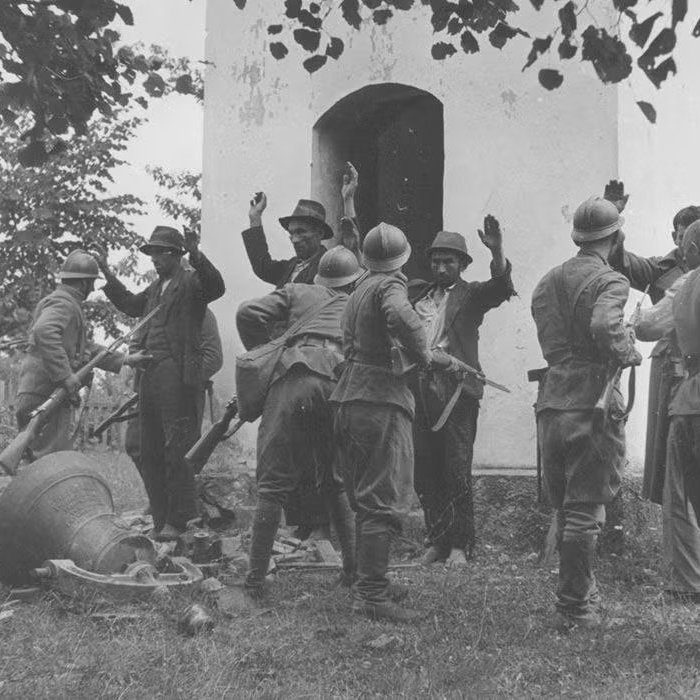
Nazi Regime’s Systematic Persecution of “Diminished” Groups:
Roma, Gays, the Disabled.
Berlin — Between 1933 and 1945 --
Under Adolf Hitler’s Nazi regime, various populations classified as “racially, socially, or biologically undesirable” were subjected to state‐sanctioned violence, persecution, sterilisation, incarceration, and murder. These policies targeted Romani people, homosexual men, persons with mental illness or physical disabilities, among others. This article details several of those policies, their implementation, and impact, drawing on historical sources and archival research.
The Nazis believed in creating a “pure” Aryan race. Those deemed biologically or mentally “defective” were considered threats to the health of the Volk (people).
German law criminalising sexual acts between men pre-dated the Nazis (from 1871), but Hitler’s government expanded it.
In 1935, the regime revised Paragraph 175 to broaden the scope of punishable homosexual behavior, removing qualifiers like “unnatural,” allowing even gestures, words or presumed intentions to be prosecuted.
Under Nazi enforcement of Paragraph 175, approximately 100,000 men were arrested for alleged homosexual acts between 1933 and 1945; about half of those arrests resulted in convictions. Those convicted or suspected were sometimes sent to prisons, sometimes to concentration camps.
In concentration camps, homosexual prisoners were forced to wear pink triangles. They often suffered harsh labor, brutality from guards and other prisoners, and high mortality from abuse, disease, and neglect.
While Paragraph 175 did not criminalize female same‐sex acts, lesbians were targeted in other ways, including social stigma, closures of gathering places, and occasionally arrested under related laws. Their experiences have been less documented.
Shortly after coming to power, the Nazi regime enacted the Law for the Prevention of Hereditarily Diseased Offspring (1933). This law permitted forced sterilisation of people with conditions deemed hereditary—epilepsy, schizophrenia, severe alcoholism, and other disabilities. Hundreds of thousands were sterilised.
Starting in 1939, the Nazis launched the T4 program to murder persons who were mentally ill, severely disabled, or otherwise deemed unfit to live. Many children and adults were killed in specially established institutions. This program was officially “suspended” in 1941 under public protest, but killings continued covertly throughout the war.
Romani people (often derogatorily called “Gypsies”) were persecuted under racial purity laws. They were subjected to forced sterilisation, internment, forced labor, and many were murdered, especially in concentration and extermination camps.
When the T4 euthanasia program became known publicly, there were protests from clergy and church leaders that pressured Hitler to formally suspend the program in August 1941. However, many killings continued in less organized forms.
Laws criminalizing homosexual acts under Paragraph 175 remained in effect in Germany after the war. The statute was not fully repealed until 1994. Survivors of persecution often continued to face legal and social stigma for years.
In later decades, recognition of these persecuted groups has grown. Monuments, memorial services, and legal compensations or pardons have been enacted in some cases.
Tens or hundreds of thousands of persons with disabilities were murdered under T4 and related euthanasia and extermination programs.
Among homosexual men arrested under Nazi laws, thousands died in camps either from direct violence, overwork, poor conditions, or medical neglect. Many more were imprisoned.
The Roma suffered massively as well, with large percentages murdered in camps or mass killings; exact numbers vary, but their suffering under Nazi racial laws and genocide is well documented.
The Nazi regime’s treatment of groups such as homosexuals, the mentally ill and physically disabled, and the Roma was systematic, multifaceted, and ideologically driven. It relied on legal tools , like Paragraph 175 and sterilization laws, medical pseudo-science (eugenics, so-called “racial hygiene”), enforced confinement and outright murder. These actions left enduring legal, moral, and human consequences—many victims remained unrecognized or stigmatized long after 1945.
source articles:
https://encyclopedia.ushmm.org/content/en/timeline-event/holocaust/1933-1938/revision-of-paragraph-175
https://encyclopedia.ushmm.org/content/en/article/gay-men-under-the-nazi-regime
https://www.britannica.com/event/T4-Program
https://www.britannica.com/summary/T4-Program
https://wienerholocaustlibrary.org/2021/02/09/persecution-of-gay-people-in-nazi-germany/
https://www.history.com/this-day-in-history/hitler-suspends-euthanasia-program
https://www.holocaust.org.uk/news/homosexual-victims-of-nazi-persecution
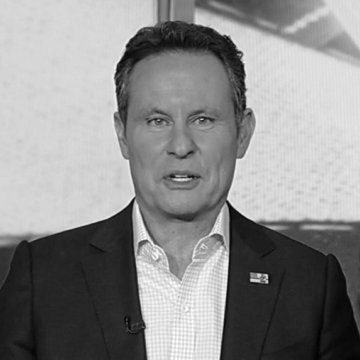
Fox News’ Brian Kilmeade Apologizes After Suggesting “Lethal Injection” for Mentally Ill Homeless People
NEW YORK — September 25, 2025 - Fox & Friends co-host Brian Kilmeade apologized this weekend after sparking outrage with remarks suggesting that mentally ill people experiencing homelessness who refuse treatment should be executed by lethal injection.
The comments, made last week during a discussion of a fatal stabbing on a Charlotte, North Carolina, light-rail train, quickly spread across social media and drew condemnation from mental health advocates, homeless services organizations, and public officials.
During the segment, Kilmeade responded to co-hosts’ concerns about safety on public transit by remarking, “Just kill ’em,” and went on to reference “involuntary lethal injection” as a response to unhoused individuals who refuse help, according to widely shared video clips and transcripts.
Advocates denounced the statements as “dehumanizing and dangerous,” warning that rhetoric suggesting state-sanctioned violence could further stigmatize and endanger vulnerable people. One shelter leader publicly invited Kilmeade to spend time volunteering at a homeless shelter to better understand the realities faced by unhoused residents.
On Sunday, Kilmeade returned to the air and offered what he called an apology, acknowledging his words were “extremely callous” and clarifying that he had intended to discuss institutionalization or incarceration rather than execution. “I wrongly said they should receive lethal injections,” Kilmeade said. Fox News has not announced any disciplinary measures.
The controversy has reignited debate over media accountability and public discourse around homelessness and mental illness. Critics note that people experiencing homelessness are statistically more likely to be victims than perpetrators of violent crime, and argue that policy efforts should focus on housing, treatment, and crisis response programs rather than inflammatory rhetoric.
Calls for Kilmeade’s firing have circulated online, though supporters of the segment framed the exchange as hyperbolic commentary reflecting frustration with rising concerns about public safety.
For now, Kilmeade remains on the Fox & Friends lineup, as pressure mounts on Fox News to address the fallout.
source articles:
https://www.cbsnews.com/news/fox-news-brian-kilmeade-apologizes-mentally-ill-homeless-people-executed/
https://www.axios.com/2025/09/15/brian-kilmeade-fox-news-lethal-injection-homeless
https://www.washingtonpost.com/business/2025/09/14/fox-kilmeade-apology/
https://www.theguardian.com/us-news/2025/sep/14/fox-brian-kilmeade-apology-homelessness-comments